Case study

What research teams
got back.

The data a team collected, where the analysis stalled, what Sutrix delivered, and what changed for the study.

Case study · RRIPG with HSS

Messy injury questionnaires to better treatment.

Challenge

Surveys collected. Analysis stalled.

  • Injury data collected at scale
  • Inconsistent records slowing analysis
  • Follow-up information difficult to use

AI-assisted. Expert-reviewed.

  1. 01

    AI does the heavy lifting

    Structures the data and runs the analysis. Flags inconsistencies for review.

  2. 02

    Experts check the work

    Review methods and results. Interpret findings in the study context.
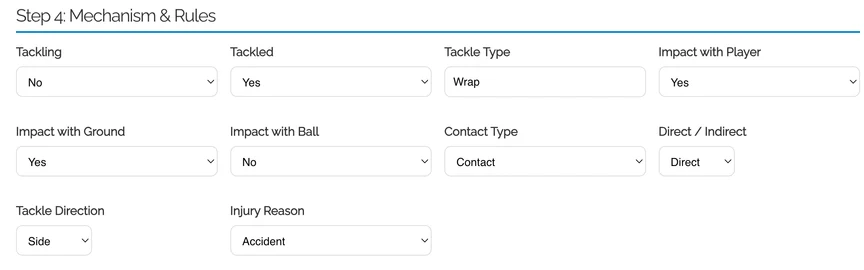
Injury mechanism intake form with tackle, impact, and contact fields the study collected for each injury
Injury intake form · one of the questionnaires the study collected

Delivered

Data preparation
2 weeks to 3 days
Analysis-ready records
70% to 95%
Findings delivered
2 confirmatory, 3 exploratory

Outcome

28% more effective follow-up treatment plans

Dr. Victor Lopez, Founder, RRIPG
Download the one-page case study (PDF)

Client study walkthrough · Georgia Tech concussion survey

How the work looks, step by step.

From source measures to an explained finding and report excerpt, on a de-identified concussion survey from a client study. The first model examines reported past care. A separate exploratory analysis identifies a follow-up question about hypothetical care-seeking intentions.

SutrixConcussion study
See our work · 1 of 4

The study starts here.

Source export headers · participant rows omitted
QID32

There is a possible risk of more serious injury or death if a second concussion occurs before the first one has healed.

QID65_1

How confident are you in your answers about your concussion knowledge? (where 1 is not confident at all and 5 is very confident)

QID24

In your lifetime, have you ever sought medical attention for a suspected concussion?

How we define the measures, shown with source excerpts. This is a walkthrough, not live processing.

Behind this example

Inspect the analysis record.

The saved-data rerun matched these aggregate outputs on 2026-09-10: 348 saved rows, 276 complete model cases and 72 exclusions. These files document this reanalysis. They do not establish independent validation or a completed client engagement.

PDF-key reanalysis, version 2: Q31 and Q37 now follow the supplied answer-key PDF. The historical code used the opposite keys. Inspect the historical version to compare. This correction does not validate every source-cleaning decision.

A separate calculation, with the same input.

A separate AI-written Python implementation matched all 25 published model entries to six decimal places, including the PDF-key reanalysis. This checks the calculation on the same cleaned data; it is not independent scientific review.

What can you verify from these files?

You can inspect the reported estimates, model specification, exclusions and multiple-testing correction. Participant records remain private, so these downloads alone cannot reproduce the analysis. The methods file records the internal verification command and exact runtime.

The follow-up candidate retained at least half its association magnitude in 999 of 1,000 bootstrap samples. Those samples reuse the same data. The separate re-fit stability check was unavailable, recorded as robustness.stable: false. Neither check establishes independent replication.

Only one exploratory candidate is published, alongside counts from the 447-comparison search. The full ledger is not included. The recovered scoring recipe has been linked to the saved model columns. Version 2 reverses the historical correctness codes for Q31 and Q37 and recomputes the complete 19-item score to follow the supplied PDF. The full exploration was rerun; the displayed candidate and search counts are unchanged. Neither check validates every cleaning decision or reproduces the original biostatistician’s model.

Dictionary / Q46_R

Recorded care-timing categories

Response labelCode
  • I would not seek healthcare0
  • Immediately1
  • Within a few hours2
  • The same day3
  • The next day4
  • Within the week5
  • Only if problems persisted after a week6
Source: data dictionary, Sheet1, row 251. These codes are category labels, not elapsed time.

Let’s talk about your study

What do you want
your data to answer?

Bring your research question and where the analysis is getting stuck. We’ll discuss the data you have, the work you need, and whether Sutrix is a fit.

Book a study call

30 minutes with Supratik, co-founder · Google Meet

How is my project priced?

We scope the work around your data, instruments, research questions, and the materials you need. We agree the deliverables, timing, project price, and included follow-up before analysis begins. The call is where we establish what your study needs.

Who checks the analysis?

Sutrix is a managed service with human review. Our team checks scoring, analytical choices, and interpretation; your team supplies the study context. The delivered methods and code let you inspect the work. Meet the founders.

What should I bring to the call?

Your research question, the kind of data you collected, where you’re stuck, and any deadline. No account or dataset is needed. We agree on data-sharing arrangements before requesting de-identified study data. Read about data handling.